


Results 491 to 500 of 950
Thread: Á
-
01-31-2021, 08:17 PM #491Biệt Thự


- Join Date
- Sep 2011
- Posts
- 27,554
Điều mà những người Mỹ phò Trump mơ ước, đang là hiện thực ở Miến Điện.
Myanmar military seizes power, detains elected leader Aung San Suu Kyi
(Reuters) -Myanmar’s military seized power on Monday in a coup against the democratically elected government of Nobel laureate Aung San Suu Kyi, who was detained along with other leaders of her National League for Democracy (NLD) party in early morning raids.
The army said it had carried out the detentions in response to “election fraud”, handing power to military chief Min Aung Hlaing and imposing a state of emergency for one year, according to a statement on a military-owned television station. A military spokesman did not answer phone calls seeking further comment.
Phone lines to the capital Naypyitaw and the main commercial centre of Yangon were not reachable, and state TV went off air hours before parliament had been due to sit for the first time since the NLD’s landslide election win in November, viewed as a referendum on Suu Kyi’s fledgling democratic government.
Soldiers took up positions at city hall in Yangon and mobile internet data and phone services in the NLD stronghold were disrupted, residents said. Internet connectivity also had fallen dramatically, monitoring service NetBlocks said.
Suu Kyi, Myanmar President Win Myint and other NLD leaders had been “taken” in the early hours of the morning, NLD spokesman Myo Nyunt told Reuters by phone.
“I want to tell our people not to respond rashly and I want them to act according to the law,” he said, adding that he expected to be arrested himself. Reuters was subsequently unable to contact him.
The detentions came after days of escalating tension between the civilian government and the military that stirred fears of a coup in the aftermath of the election.
The White House said President Joe Biden had been briefed on the arrest of Suu Kyi.
“The United States opposes any attempt to alter the outcome of recent elections or impede Myanmar’s democratic transition, and will take action against those responsible if these steps are not reversed,” spokeswoman Jen Psaki said in a statement.
The Australian government said it was “deeply concerned at reports the Myanmar military is once again seeking to seize control of Myanmar” and called for the immediate release of the unlawfully detained leaders.
Japan said it was watching the situation and currently had no plans to repatriate Japanese nationals from Myanmar.
COUP FEARS
Nobel Peace Prize winner Suu Kyi, 75, came to power after a 2015 election win that followed decades of house arrest in a struggle for democracy with Myanmar’s junta that turned her into an international icon.
Her international standing was damaged after hundreds of thousands of Rohingya fled army operations into refuge from Myanmar’s western Rakhine state in 2017, but she remains hugely popular at home.
Political tensions soared last week when a military spokesman declined to rule out a coup ahead of the new parliament convening on Monday, and military chief Min Aung Hlaing raised the prospect of repealing the constitution.
But the military appeared to backtrack on the weekend, issuing a statement on social media on Sunday saying it would “do everything possible to adhere to the democratic norms of free and fair elections”.
Tanks were deployed in some streets last week and pro-military demonstrations have taken place in some cities ahead of the first gathering of parliament.
Myanmar’s election commission has rejected the military’s allegations of vote fraud.
The constitution published in 2008 after decades of military rule reserves 25% of seats in parliament for the military and control of three key ministries in Suu Kyi’s administration.
Daniel Russel, the top U.S. diplomat for East Asia under President Barack Obama, who fostered close ties with Suu Kyi, said another military takeover in Myanmar would be a severe blow to democracy in the region.
“If true, this is a huge setback - not only for democracy in Myanmar, but for U.S. interests. It’s yet another reminder that the extended absence of credible and steady U.S. engagement in the region has emboldened anti-democratic forces,” he said.
Murray Hiebert, a Southeast Asia expert at Washington’s Center for Strategic and International Studies think tank, said the situation was a challenge for the new U.S. administration.
“The U.S. as recently as Friday had joined other nations in urging the military not to move forward on its coup threats. China will stand by Myanmar like it did when the military kicked out the Rohingya,” he said.
John Sifton, Asia advocacy director for Human Rights Watch, said Myanmar’s military had never submitted to civilian rule and called on the United States and other countries to impose “strict and directed economic sanctions” on the military leadership and its economic interests.
Reporting by Reuters staff; Writing by Stephen Coates; Editing by Peter Cooney and Lincoln Feast.
/*src.: https://www.reuters.com/article/us-m...-idUSKBN2A00VC

 Puck Futin
-
01-31-2021, 09:31 PM #492Biệt Thự
- Join Date
- Sep 2011
- Posts
- 27,554
Karōshi - 過労死 - Sanh nghề tử nghiệp
Japan mulls four-day working week amid COVID pandemic
Japanese lawmakers are debating whether companies should offer their staff the option of a regular three-day weekend, hoping that more relaxed workers will be less at risk of "karoshi," or death by overwork.

In Japan, several hundred people die every year of heart attacks, strokes or other medical problems brought on by overwork
Japanese employees are famous for putting in agonizingly long hours at their desks and declining to take all their annual holidays for fear of inconveniencing office colleagues. But changes that were becoming evident in society have been exacerbated by the coronavirus pandemic.
Members of the Japanese parliament on Wednesday opened discussions on a proposal put forward by Kuniko Inoguchi, a member of the ruling Liberal Democratic Party, to permit workers to opt for a four-day working week instead of the traditional five-day, Monday-to-Friday pattern.
A handful of Japanese companies have already instituted flexible working systems, but the changes wrought on the corporate landscape by COVID-19 have hastened the debate on the issue.
And the early signs are that it would have the support of workers and companies.
"I would say that rather than being a possibility at companies, it should be a necessity," Teruo Sakurada, a professor of business at Osaka's Hannan University, told DW.
Economy under pressure
"Japan's economic system is under a great deal of pressure – made more acute by the pandemic. We we need to make changes to ensure that it is sufficiently resilient and able to meet the needs of companies in the future," he said.
In recent decades, Japan has shifted from an economy that is based on manufacturing to one that is more reliant on the service sector and financial services. That trend will continue as the nation's population continues to contract from 126.5 million at present to possibly as few as 83 million by the end of the century.
"These changes mean that Japan has to be far more efficient in the future, and we need to find ways to improve both working conditions for people and the amount of leisure time that they can enjoy," Sakurada added.
Most immediately, Sakurada wants changes in the working environment for millions of Japanese to bring an end to "karoshi," the primarily Japanese problem of death brought on by overwork.
A 2016 government study determined that one in five Japanese workers were at risk of karoshi, with nearly a quarter of companies requiring staff to put in more than 80 hours or overtime each month, often unpaid. As a consequence, several hundred people were dying every year of heart attacks, strokes or other medical problems brought on by overwork, with more driven to suicide.
A new law went into effect in April 2019 that limited overwork to 100 hours a month and imposed fines on companies that broke the rules. Critics point out that there are loopholes in the law, which Sakurada hopes reducing the working week might help to close.
Karoshi crisis
"This law would enable more people to work fewer hours and be less stressed, which would in turn reduce the likelihood of karoshi," Sakurada said, adding that it would also create new employment opportunities.
Inoguchi said the pandemic has shown that Japan "has the latent ability to create flexible work environments and work styles." The lawmaker pointed out that enabling workers to choose to have a three-day weekend would give them more opportunities to spend time with their children or elderly relatives, pursue educational opportunities, examine the possibility of other business ventures and contribute to the national economy by consuming.
It is also considered likely that couples who want to have more children but fear they just do not have the time to raise youngsters, might change their minds and have larger families. That, in turn, would help to reverse the problem of a declining population.
The major drawback that has been identified is, inevitably, the lower wage associated with working one day less per week. But that has not proved a complete deal-breaker at companies that have already introduced the option of a four-day working week.
Both Microsoft Japan and the Mizuho Financial Group have introduced schemes under which staff can choose to cut a day off their week, while Fast Retailing, the company behind the Uniqlo chain of clothing stores, first gave staff the option of four-day weeks back in 2015.
"We introduced a range of changes designed to make the working environment better for our staff primarily because we wanted to retain our best talent," said Pei-chi Tung, a spokeswoman for the company.
'Worker-friendly environment'
"We knew that we needed to make Uniqlo a worker-friendly environment. Giving employees the option of working four days and then having a long weekend every week was part of that," she told DW.
The system has proved quite popular, Tung said, although a majority of people still prefer to work the traditional five-day week. But they agree that it's a good option to have if they suddenly find that a family member is ill or there are other reasons that they need a bit more time off, she added.
Inoguchi's proposal would see the government extend financial support, in the early stages, for companies that introduce reduced working weeks.
Perhaps the biggest obstacle to a widespread acceptance of the system, however, would be from older and traditionally minded manager-level employees, who put in the long hours to build Japan into the economic powerhouse that it is today. They are likely to frown upon a new generation of workers not showing quite the same commitment to the company and the nation.
/* src.: https://www.dw.com/en/japan-mulls-fo...mic/a-56384335
Puck Futin
-
02-01-2021, 09:17 AM #493Banana ArtBook

- Join Date
- Sep 2011
- Location
- Ốcland
- Posts
- 10,654
Nhiều người sống để đi làm. Ông xếp trong văn phòng cũng nói khi ổng làm việc thì ổng mới thấy rì lắc, còn ngồi chơi chút xíu là trong bụng lại thấy chộn rộn lo công việc cần phải làm.
Nhàn cư vi bất tiện.
-
02-01-2021, 09:31 AM #494Banana ArtBook
- Join Date
- Sep 2011
- Location
- Ốcland
- Posts
- 10,654
Vậy là QAnon hồi nào giờ nói chuyện của Miến điện chứ hông phải chuyện Mỹ. Originally Posted by Triển

75 tuổi về hưu được rồi. Kỳ này Amnesty International chắc cũng hông thèm giúp. Tưởng giống Gandi ai dè giống Trâm.Nobel Peace Prize winner Suu Kyi, 75, came to power after a 2015 election win that followed decades of house arrest in a struggle for democracy with Myanmar’s junta that turned her into an international icon.
Her international standing was damaged after hundreds of thousands of Rohingya fled army operations into refuge from Myanmar’s western Rakhine state in 2017, but she remains hugely popular at home.
-
02-01-2021, 10:05 PM #495Biệt Thự
- Join Date
- Sep 2011
- Posts
- 27,554
Originally Posted by ốc
Có thể mở văn phòng tại gia và thành lập đảng riêng. Puck Futin
-
02-02-2021, 06:16 AM #496Banana ArtBook
- Join Date
- Sep 2011
- Location
- Ốcland
- Posts
- 10,654
Đúng.
Đập bể nồi cơm:
The nights of pots and pans are back, on Myanmar's fearful streets
https://www.theguardian.com/global-d...earful-streets
The pots calling the kettles...Central Yangon was quieter than usual on Tuesday morning, but people soon ventured out into a new, uneasy world. Queues that snaked from ATMs and supermarkets the previous day had dwindled, while telephone lines and mobile internet services that had been patchy since the first hours of the coup began to return. A form of normality was restored, though one fraught with anxiety over the next move either from the military or from the public, many of whom are not willing to accept another military dictatorship.
While military trucks remained outside City Hall in downtown Yangon and pro-military protesters gathered at a local park on Tuesday, the first stirrings of resistance emerged. A teachers’ federation called for the release of detained politicians and student leaders, Yangon Youth Network announced a civil disobedience campaign and doctors in Mandalay refused to work under the military junta.
Memories of the electricity and food shortages after the 1988 pro-democracy protests are still vivid for many – but even more the brutal onslaught brought by the military against protesters.
In the streets, some residents have quietly removed posters of the NLD to avoid the scrutiny of the military and its supporters, but to a larger extent profile templates of Aung San Suu Kyi and her party have sprung up on Facebook – Myanmar’s dominant mode of online communication.
Young or old, however, those who oppose the military understand what its soldiers are capable of. Instead of giving them a reason to shoot into a crowd, on Tuesday night they will show their solidarity with pots and pans.
-
02-02-2021, 08:31 PM #497Biệt Thự
- Join Date
- Sep 2011
- Posts
- 27,554
Hexodus - a path of no return
Will UK Hong Kong immigration program trigger an exodus?
Millions of Hong Kong residents are eligible for a fast-track UK citizenship program. Two young emigrants told DW that escaping the long arm of Beijing is worth the struggle of starting over in a foreign country.
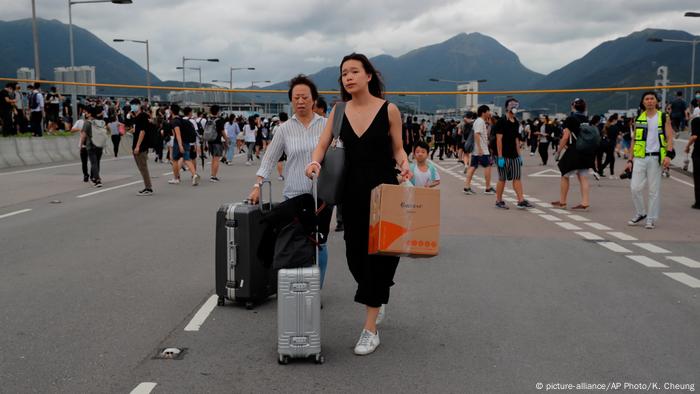
Many Hong Kong citizens are uncertain of the future yet see a chance to start over in the UK's offer
On January 31, the United Kingdom kicked off an immigration program that will ease UK citizenship requirements for millions of Hong Kong citizens who want to leave the territory in the wake of continued pressure from Beijing on civil liberties.
The UK Home Office estimates there are 2.9 million British National Overseas (BNO) status holders eligible to move to the UK, with a further estimated 2.3 million eligible dependents. Under the new scheme, these people will be able to apply online for a visa. BNO arrivals from Hong Kong are allowed to live, work and study in the UK as long as they can financially support themselves.
After five years in the UK, they will be able to apply for citizenship. BNO status is a legacy of British colonial rule specifically granted to Hong Kong residents born before the territory was handed back to China in 1997.
The UK government forecasts the new visa could attract more than 300,000 people and their dependents over the next five years. Many Hong Kong residents are already welcoming the chance to leave.
A new life far away from home
Sun, a 29-year-old civil engineer, arrived in the UK last December on a BNO passport, deciding he wanted to get in ahead of the visa program's start date.
Sun felt insecure after the Umbrella Movement in 2014 and renewed his BNO passport. The massive anti-government protests in 2019, and the ensuing crackdown from Hong Kong's Beijing-backed leadership, he says, were the last straw, prompting his decision to leave as soon as possible.
"The Hong Kong government's terrible handling of the political crisis made Hong Kong no different from mainland China," he told DW, adding, Hong Kong's leadership "is no longer serving the people of Hong Kong and even threatens our way of life."
The UK said the decision to open its doors to Hong Kongers was fulfilling a "historical and moral commitment" to the people of the former colony.
In June 2020, Beijing imposed a national security law on Hong Kong, which was criticized around the world as an authoritarian tool to quash dissent and erode civil liberties. Since then, dozens of pro-democracy activists have been arrested.
Wong, a 30-year-old civil servant in Hong Kong, decided to move to the UK after city authorities ordered all civil servants to sign a declaration of loyalty.
"We didn't want to sign it as it required us to pledge unconditional loyalty to authorities. No dissent is allowed even when we're off duty. That is an infringement of personal rights," Wong told DW.
"I feel ashamed to work for a government with which I have disagreed with since the 2019 protests. I'm even more worried that pledging allegiance to it would complicate my citizenship application in other democratic countries."
Securing a democratic future abroad
The UK estimates that that the 300,000 people expected to arrive over the next five years could bring a net economic benefit of up to £2.9 billion ($4 billion / €3.3 billion) to the UK.
Wong and his family say they will depart once they sell their property in Hong Kong. He said giving up a well-paid job with a monthly salary of $15,000 is less important than securing a future for his newborn daughter.
"The national security law in 2020 was a critical turning point. It signaled the death of 'one country two systems.' There's no hope for democracy and freedom anymore," Wong said.
"Hong Kong has lost the protection of its constitution. I cannot let my child grow up in a brainwashed environment that only instills one set of values controlled by China," he added.
Although Wong has no access to social welfare benefits in the UK, his daughter will be eligible for enrolling in public school.
A path of no return?
Beijing has pushed back against the migration scheme and will no longer recognize BNO passports as valid identification.
As Beijing considers further response measures, Sun and Wong told DW that rumors of Beijing cracking down further on BNO passport-holders by removing voting rights will likely fuel an exodus, rather than be a deterrent.
"It would have been a dilemma a few years ago but not now. It's meaningless to retain my electoral rights when fair elections have been wiped out," Sun said.
However, for most people, starting a new life far away from home is a path of no return.
"We, the emigrants, are the lucky ones compared to those who can't leave," Sun said. "Even though Hong Kong people are in a diaspora, I hope our hearts are still united just as they were on the streets in 2019."
/* src.: https://www.dw.com/en/will-uk-hong-k...dus/a-56428066
Last edited by Triển; 02-02-2021 at 08:34 PM.
Puck Futin
-
02-03-2021, 04:33 PM #498Banana ArtBook
- Join Date
- Sep 2011
- Location
- Ốcland
- Posts
- 10,654
No return: I ran from Iran. Originally Posted by Triển
Academic jailed in Iran pulls off daring escape back to Britain
https://www.theguardian.com/world/20...-kameel-ahmady
Ghét nhau mấy núi cũng trèoA British Iranian dual national sentenced to nine years and three months in jail in Iran for co-operating with “a hostile state power” has smuggled himself out of Iran, escaping over the country’s treacherous mountainous border, and is now living in London.
In an interview with the Guardian, Kameel Ahmady explained he felt had no option but to flee after spending nearly 100 days in Evin prison, including a brutal spell in solitary confinement while he was being interrogated.
Ahmady, a social anthropologist whose research revealed the extent of female genital mutilation (FGM) in Iran, was found guilty of conspiring with hostile foreign powers in November 2020, among other charges, but was released on bail pending his appeal. He was also fined more than £500,000.
Ahmady said he did not yet know whether Iranian officials realised he had escaped the country.
He escaped carrying only his laptop and copies of the books and articles he had published, crossing the border through snow 1.5 metres deep and fog, evading Iranian border patrols. Border security has been heightened ever since the assassination of the Iranian nuclear scientist Mohsen Fakhrizadeh in Tehran last year.
“I am Kurdish by ethnicity and I know some of the routes, but it was very dangerous. I had to try several times,” he said.
Ahmady followed the paths used by mountain porters evading US-imposed sanctions to carry alcohol, car parts, medicine, cigarettes and contraband from Iraq and Turkey. But the routes are hazardous: one smuggler carrying four tyres on his back was recently shot by border guards, while several others have frozen to death.
He said he feared if he had been caught he would have faced more years in jail, but he had to take the risk. “I smuggled myself out of Iran out of despair,” he said. “I felt I had no other choice or option to leave. I was banned from travelling. I had this bounty and this sentence.”
Ahmady is one of a small number of British Iranian dual nationals, including Nazanin Zaghari-Ratcliffe, who have been arrested in Iran and held apparently for bargaining purposes.
Mấy sông cũng lội, mấy đèo cũng đi.
-
02-03-2021, 09:25 PM #499Biệt Thự
- Join Date
- Sep 2011
- Posts
- 27,554
Originally Posted by ốc
"kiu" là có nợ chớ hổng có "dziên". Puck Futin
-
02-05-2021, 09:26 PM #500Biệt Thự
- Join Date
- Sep 2011
- Posts
- 27,554
Thuốc chích ngừa nguyên tử lượng mới của hãng Mỹ-Âu: US+E3
US, European partners pledge to 'revive' alliance, work together on Iran
The US, France, Germany, and the UK pledged to mend their alliance and work together to tackle Iran’s nuclear program. This marks a major shift from the Trump administration's "America First" approach.

US Secretary of State Antony Blinken, along with German, French, and British foreign ministers on Friday pledged to "revive" their transatlantic alliance, working together on issues such as Iran and the coronavirus. The virtual meeting was their first since President Joe Biden's inauguration last month.
"Productive discussion with French Foreign Minister Jean-Yves Le Drian, German Foreign Minister Heiko Maas, and UK Foreign Secretary Dominic Raab today on COVID, Iran, Burma, and other pressing issues," Blinken tweeted on Friday, adding "the transatlantic relationship is central to solving global challenges." The Biden administration plans to take a friendlier approach towards European allies, after former President Donald Trump criticized European leaders on issues such as defense and trade.
A ‘united' approach on Iran
"The E3 and the US discussed how a united approach could address our shared concerns towards Iran," UK Foreign Secretary Dominic Raab said in a statement about the meeting. The Biden administration has previously expressed willingness to re-enter the 2015 Iran deal, also known as the Joint Comprehensive Plan of Action (JCPOA), after the Trump administration chose to withdraw from the agreement in May 2018.
Le Drian said the four diplomats held an "important conversation on Iran," with all four countries tackling nuclear and regional security challenges "together."
The Iran deal has previously caused tension between the United States and Europe. Shortly before Trump announced the US would leave the deal, Prime Minister Boris Johnson wrote an opinion piece in The New York Times urging Trump to stay in the agreement, with Johnson calling withdrawal "a mistake.”
Although the Biden administration is looking at re-entering the deal, the State Department has said it would not do so until Tehran is in full compliance with the JCPOA. Blinken has previously vowed to consult with Israel before re-entering the agreement.
wd/dj (AP, Reuters)
/* src.: https://www.dw.com/en/us-european-pa...ran/a-56477799
Puck Futin

 Reply With Quote