


Results 1,761 to 1,770 of 2022
Thread: Âu
-
05-30-2023, 10:23 PM #1761Biệt Thự


- Join Date
- Sep 2011
- Posts
- 27,513
Europe Stages Summit to Warn Moscow that Moldova is Not Alone
West demonstrates it support for Moldova in extraordinary summit outside of Chisinau.
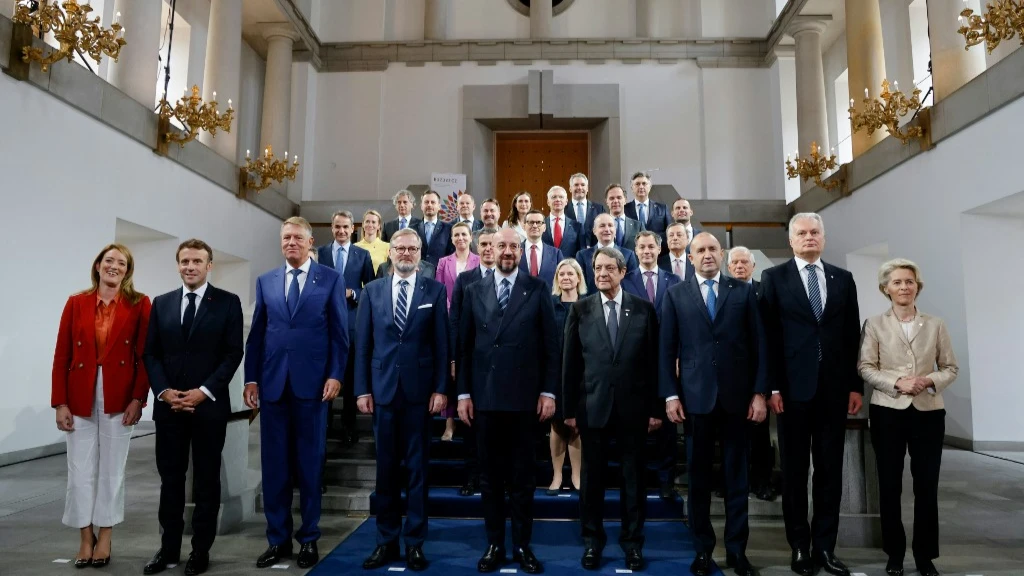
EU leaders during an informal summit of the European Union (EU) in Prague, on October 7, 2022. EU leaders meeting in Prague will look to overcome divisions on how to tackle soaring energy prices as they grapple with the fallout from Russia's war on Ukraine. Ludovic MARIN / AFP
There may not be much time to discuss security strategy in detail, but a summit of up to 47 European leaders just outside Moldova's capital Chisinau on June 1 should send Russia a powerful message.
Moldova's fragile democracy lives under the shadow of Moscow's invasion of neighboring Ukraine and efforts by Russian-backed agents to undermine its ambitions towards European integration.
It will already be a logistical and political feat if the European Political Community (EPC) manages to gather dozens of heads of state and government on Thursday for a summit group photo in solidarity with Moldova's pro-Western government.
The EPC is a forum for European leaders inside and outside the EU to discuss common strategic threats, and EU candidates like Moldova -- an economically weak former Soviet republic of less than three million -- see membership as a staging post on the road to Brussels.
"There has never been such a mega-event in the history of Moldova," said Felix Hett, an expert on Ukraine and Moldova at Germany's Friedrich Ebert Foundation.
"If all goes well, the summit will be a promotional event for Moldova, a proof of what the small country can achieve," he told AFP.
Moldova is divided between a breakaway region occupied by Russian "peacekeepers" and its politics have been undermined by corruption and foreign provocateurs.
It has fallen behind neighbors to the west and north in the quest to join the European project, but the increased attention being paid by Western nations to the region since Russia's all-out invasion of Ukraine has shaken up the political picture.
"Moldovan politicians are aware that they owe EU candidate status to the war in Ukraine," Hett said.
To ensure the safe and orderly organization of the summit a vast air traffic operation has been set up to accommodate leaders' planes at Moldova's small airport.
More than 2,000 delegates are expected to attend the talks in Mimi Castle, a wine estate 35 kilometerss (20 miles) outside Chisinau and about the same distance from Tiraspol, capital of the separatist region of Transnistria.
France's President Emmanuel Macron, who promoted the idea of the EPC as a European strategic vehicle that would embrace countries outside the European Union -- but exclude Russia and its ally Belarus -- is due to attend.
In addition to the 27 EU members, 20 more leaders have been invited from countries with as varied strategic interests as the United Kingdom, Turkey, Switzerland, Iceland, Serbia, Armenia and Azerbaijan.
The first EPC summit in Prague in October last year gathered 44 leaders, and since then the microstates of Andorra, Monaco and San Marino have joined.
The second meeting may also see an appearance by President Volodymyr Zelensky -- fresh from a diplomatic tour to the Arab League in Saudi Arabia and the G7 summit in Japan -- although the Ukrainian leader's travel plans are never revealed in advance.
"We'll need to see who is in the photo, but also who isn't there," said Sebastien Maillard, Director of the Jacques Delors Institute, a Brussels-based think tank.
"It's also an opportunity to show that the Europeans can discuss their strategic interests among themselves, without the Americans."
- 'Moldova is not alone' -
For Moldova itself, the stakes are more straightforward than a debate about where the balance of power lies in Western leadership circles: The summit is a stage to promote its EU ambition and to surround itself with friends in the face of Russian maneuvers.
Earlier this month, President Maia Sandu told AFP that Moldova wants to join the European Union "as soon as possible" and to begin formal accession talks within months.
"Of course, nothing compares to what is happening in Ukraine, but we see the risks and we do believe that we can save our democracy only as part of the EU," she said.
"We do believe that Russia will continue to be a big source of instability for the years to come and we need to protect ourselves."
In the run up to the summit, European leaders have been posting short videos of support for Moldova linked by the hashtag: "MoldovaIsNotAlone".
In June 2022, less than four months after Russia unleashed an all-out invasion, the EU member states granted Ukraine and Moldova official candidate status. In the months to come, they will have to decide when to begin negotiating membership terms.
Judging by the experience of other recent arrivals, and of the countries of the Western Balkans languishing in the EU waiting room, the whole process could take years, despite Zelensky's mounting frustration and a recent huge pro-EU rally in Moldova.
/* src.: https://www.kyivpost.com/post/17671

 Puck Futin
-
06-02-2023, 08:30 AM #1762Biệt Thự
- Join Date
- Sep 2011
- Posts
- 27,513
German citizenship: Record number of naturalizations
Volker Witting
05/31/2023
More people have applied for and been granted German nationality than at any time in the past 20 years. This is good news as the government wants to attract qualified professionals to the labor market.
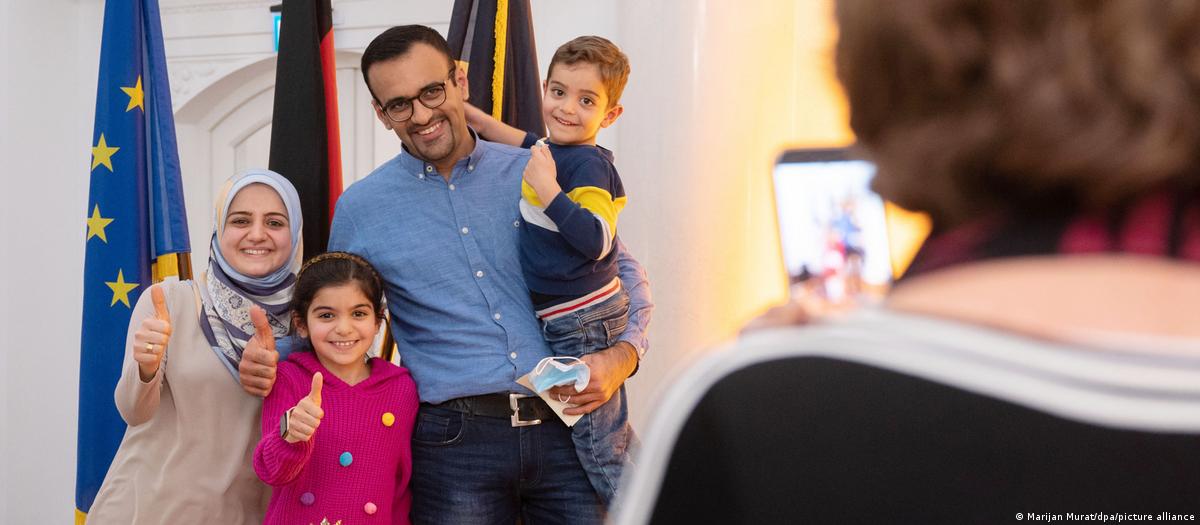
For this Iraqi family, receiving the German citizenship was a reason to celebrate
Image: Marijan Murat/dpa/picture alliance
A record 168,545 applicants with 171 different nationalities received German citizenship in 2022. That was 28% more than in the previous year, the Federal Statistical Office in Wiesbaden reported this week.
Twenty-nine percent of people who adopted German nationality in 2022 were from Syria, their average age was 24.8 years, and two-thirds of them are male. Many of them had fled their homeland when the civil war broke out in 2014 and have since found a new home in Germany. Before naturalization, they had been in Germany for an average of 6.4 years.
Syrians topped the list, followed by Ukrainian, Iraqi and Turkish nationals.
"Almost half of all Syrians who received their German passports did so after only six years. That's because they were able to demonstrate exceptional integration achievements," Jan Schneider, of the independent Expert Council on Integration and Migration, told DW.
"In fact, we can expect the number to rise further this year," Schneider said, as the ruling center-left coalition of Social Democrats (SPD), Greens and neoliberal Free Democrats (FDP) has comprehensive plans for changing and simplifying the citizenship law.
High hurdles so far
Currently, the requirements for naturalization include language skills (B1) and a secure income, and candidates must have lived in Germany for a minimum of eight years.
People who want to become German citizenship have not only had to pay the fee of €255 ($272) but also need to be able to document their identity and pass a written test in German, which consists of 33 questions on German customs and society and the law. Applicants must also declare their support for democracy and the German constitution, the Basic Law.
Anyone who has been convicted of a criminal offense does not stand a chance. Neither do applicants who have no income or savings and rely solely on state support.
But, now, Germany sees a labor shortage across its economy, ranging from IT specialists to medical staff to food servers. Labor market experts have estimated that Germany needs 400,000 immigrants per year to close the widening gap. Currently, only 60,000 are attracted each year by the government's skilled immigration program.
A fundamental change in the citizenship law, the government argues, could be an incentive for people to come and for those already living here to integrate better.
Plans to simplify the citizenship law
Legislation proposed by Interior Minister Nancy Faeser will make dual citizenship easier, as well as naturalization for non-EU citizens. It boils down to three main changes.
Immigrants legally living in Germany will be allowed to apply for citizenship after five rather than eight years. This shall go down to only three years if the applicant can show special integration achievements.
Children born in Germany of at least one parent who has been living legally in the country for five or more years will automatically get German citizenship.
Multiple citizenships will be allowed.
So far, only EU and Swiss nationals, and those whose country of origin does not allow people to renounce citizenship such as Iran, Afghanistan and Morocco, for example; refugees who are threatened with persecution in their home countries; and Israelis are generally permitted to hold on to their original passports when they get a German one.
Schneider believes that, for some of the approximately 1.3 million Turks who are living in Germany, "the dual passport may well be an incentive for naturalization."
Opposition to reform
The new record figures for naturalizations have triggered another storm of protest among critics, especially from the largest opposition group, the center-right Christian Democrat Union and the regional Christian Social Union (CDU/CSU). Their parliamentary group's spokesman, Thorsten Frei, told the daily newspaper Die Welt: "The plans of Interior Minister Nancy Faeser increase the risk that more people will be naturalized who are not sufficiently integrated." He said there were no convincing reasons to lower the requirements for a German passport.
Currently, about 6 million foreign citizens have been living in Germany for over eight years. If the minimum period of residence for naturalization is set at five years, migration expert Schneider pointed out, most of them will meet the criteria for naturalization.
Although it is not possible to predict today whether parliament will approve the government's bill, "a massive increase in naturalization applications" is to be expected, Schneider said. "Applications for naturalization are already piling up in many Citizens' Offices," he added.
/* src.: https://www.dw.com/en/german-citizen...ons/a-65785122
Puck Futin
-
06-02-2023, 07:29 PM #1763Banana ArtBook

- Join Date
- Sep 2011
- Location
- Ốcland
- Posts
- 10,531
Vậy sao nhiều Việt cộng xin vô làm công dân Đức cũng lọt?Applicants must also declare their support for democracy
Di dân vi quý
-
06-02-2023, 09:28 PM #1764Biệt Thự
- Join Date
- Sep 2011
- Posts
- 27,513
 Originally Posted by ốc

Muốn có quốc tịch Đức điều kiện đầu tiên là ở Đức hợp pháp 8 năm liên tiếp (thời tui là 15 năm). Nếu không có giấy tờ hợp pháp (quyền cư trú, quyền tạm dung, du học xong ra có công ty bảo lãnh ở lại làm việc ít nhất 3 năm ..etc) làm sao ở Đức? Còn thi vô quốc tịch thì tui có coi bài trắc nghiệm trên mạng rồi, dễ òm, tuy nhiên tiếng Đức vẫn khó hơn tiếng Anh nhiều lắm. Không dễ ăn đâu. Di dân thì phải là dân rất giàu, nghĩa là kinh qua việc đầu tư mới có giấy tờ cư trú hợp pháp.
Mà dân giàu thì người ta đi Monaco, Hy Lạp, Malta, Lục xâm bảo ... là những nước ở Châu Âu có thiên đường thuế má. Chui vào Đức là từ tư bản đỏ thành tư bản xanh lè luôn vì tiền bị đóng thuế nặng nề.
Bây giờ họ muốn xúc tiến từ 8 xuống thành 5 năm cư trú liên tục, vì thiếu nhân công quá, nhất là các ngành kỹ nghệ cần đầu óc (cơ khí chế tạo máy, điện toán, viễn thông, viễn liên, khoa học không gian...) và các ngành nghề y tế (bác sĩ, y tá, điều dưỡng), ngay cả giáo chức cũng thiếu. Dân Đức không chịu ... đẻ. Dân già đi không ai lo không tạo điều kiện còn so đo cộng sản với trừ sản gì. Nếu sợ cộng sản đã không thống nhất nước Đức từ phia rồi thầy Ốc. Puck Futin
-
06-05-2023, 09:25 PM #1765Biệt Thự
- Join Date
- Sep 2011
- Posts
- 27,513
Hai hôm nay chiến trường Đông Nam sôi động, hư-thực chưa biết ra sao. Ukraine đã bắt đầu phản công chăng?
Chú thích: Originally Posted by https://www.understandingwar.org/publications
ISW = Institute for the study of war
Puck Futin
-
06-06-2023, 01:19 AM #1766Biệt Thự
- Join Date
- Sep 2011
- Posts
- 27,513
Tin nóng: Ukraine cáo buộc Nga phá đập Kahovka. 80 vùng có nguy cơ bị lụt.
Ukraine: Kyiv accuses Russia of blowing up Kakhovka dam
36 minutes ago
Ukraine says Russian forces blew up the Kakhovka dam on the Dnipro River.
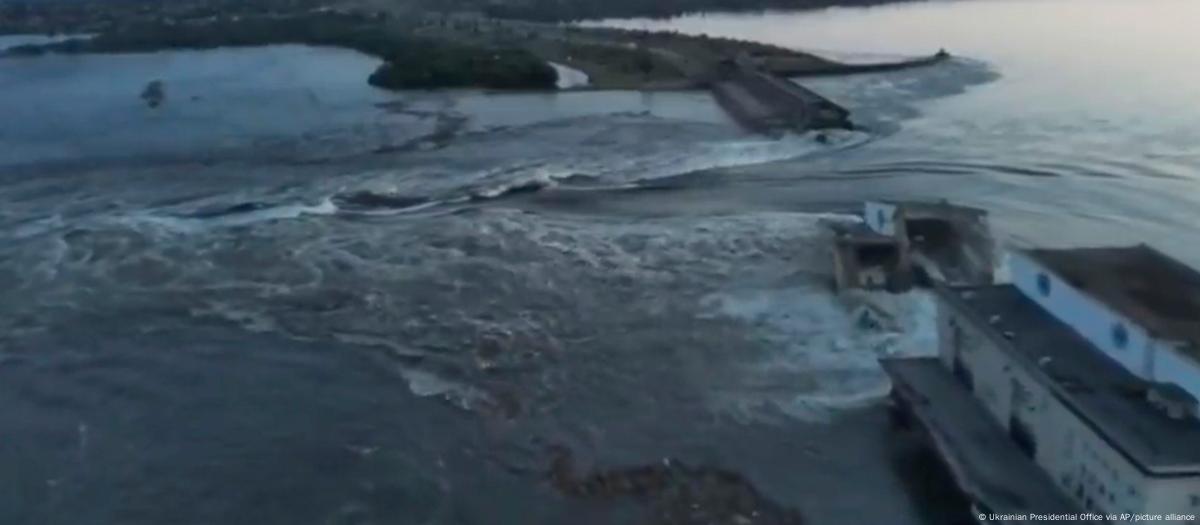
Some 80 settlements downstream are at risk of floodingImage: Ukrainian Presidential Office via AP/picture alliance
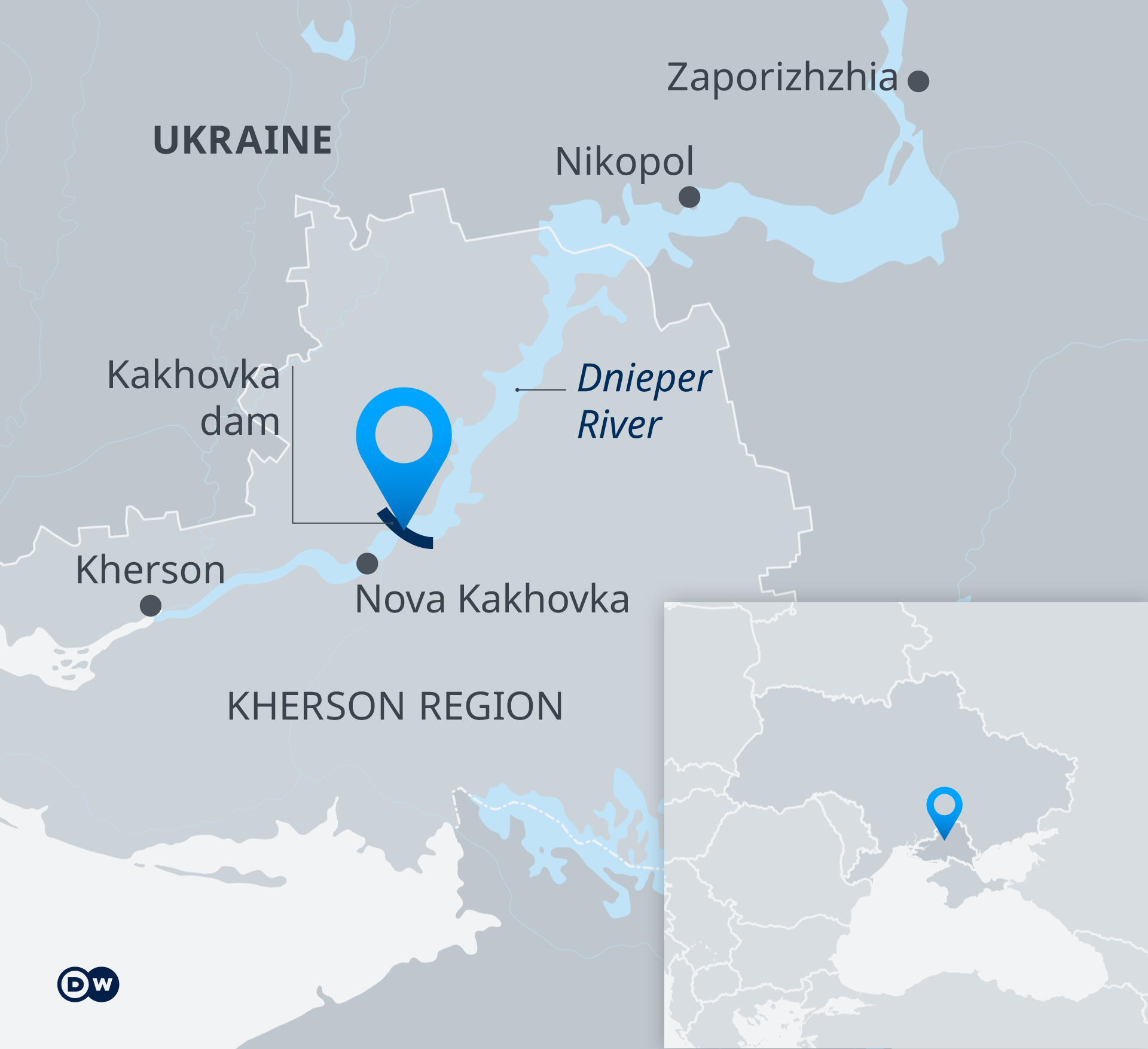
The Kakhovka dam in southern Ukraine has been blown up, Ukrainian and Russian officials said on Tuesday, threatening to flood areas downstream along the Dnipro River.
Ukraine's state hydroelectric company said the power plant had been "totally destroyed" after a detonation inside the engine room.
The Soviet-era hydroelectric plant also supplies water to the Crimean peninsula, which was annexed by Russia in 2014, and to the Zaporizhzhia nuclear plant, which is also under Russian control.
"The Kakhovka [reservoir] was blown up by the Russian occupying forces," the South command of Ukraine's Armed Forces said on Tuesday morning on its Facebook page.
"The scale of the destruction, the speed and volumes of water, and the likely areas of inundation are being clarified."
The Ukraine's Kherson regional administration said that the water level would reach a critical level in five hours and began evacuating the population from dangerous areas.
"The destruction of the Kakhovka hydroelectric power plant dam only confirms for the whole world that they must be expelled from every corner of Ukrainian land," Ukrainian President Volodymyr Zelenskyy said.
"Not a single meter should be left to them, because they use every meter for terror."
The Moscow-installed mayor of the nearby town of Nova Kakhovka initially denied social media reports that the dam had been blown up, but later said the dam had been shelled in "a serious terrorist act."
Several islands have flooded, Russian officials said, while authorities in both countries said some 80 settlements downstream were at risk of being inundated.
/* src.: https://www.dw.com/en/ukraine-update...red/a-65833125
Puck Futin
-
06-08-2023, 01:23 AM #1767Biệt Thự
- Join Date
- Sep 2011
- Posts
- 27,513
"Air Defender 2023"
Puck Futin
-
06-08-2023, 01:38 AM #1768Biệt Thự
- Join Date
- Sep 2011
- Posts
- 27,513
Puck Futin
-
06-13-2023, 09:47 PM #1769Biệt Thự
- Join Date
- Sep 2011
- Posts
- 27,513
Đọc bản tin xong chỉ còn biết thở dài. Tại sao người ta nhẫn tâm như vậy nhỉ? Mẹ 32 con 12, nghĩa là sanh đứa con lúc 20 tuổi nên sanh hận chăng. Thú vật còn biết thương con mình. Đặc biệt con chim cánh cụt, cha mẹ còn thay nhau bảo bọc đứa con huống gì làm người mẹ mang vừa nặng đẻ cũng đau.
Woman in custody in Austria after reportedly torturing son, 12
June 12, 2023
BERLIN (AP) — A woman is in custody in Austria after reportedly abusing her 12-year-old son by shutting him in a dog crate, pouring cold water over him and leaving him exposed to freezing temperatures.
A police spokesman in Lower Austria province, Johann Baumschlager, confirmed on Monday that the 32-year-old woman is under investigation on suspicion of attempted murder among other offenses, the Austria Press Agency reported.
The daily Kurier first reported on the case. A social worker reportedly alerted authorities on Nov. 23 after the boy fell into a coma because his body temperature had dropped to 26.8 degrees Celsius (80.2 Fahrenheit). He was taken to a hospital, which filed a criminal complaint. The mother was then arrested.
The child’s condition has since improved, and the police investigation is ongoing, Baumschlager said. Authorities didn’t specify where exactly the incident took place.
On May 22, Austria’s Supreme Court of Justice rejected a complaint by the woman against being kept in investigative custody, APA reported. She is suspected of torturing her son from early September until Nov. 22 last year by punching him, failing to have his injuries treated, shutting him in a dog box for hours, starving him and repeatedly pouring cold water on him, according to the court.
On some occasions in November, she is alleged to have poured water on the boy and then opened the windows of their apartment when the temperature outside was below freezing.
Prosecutors in Krems, west of Vienna, said that they are still awaiting several reports in the case and expect a decision on a possible indictment in the late summer.
/*src.: https://apnews.com/article/austria-c...301dc23afffbe5
Puck Futin
-
06-13-2023, 09:57 PM #1770Biệt Thự
- Join Date
- Sep 2011
- Posts
- 27,513
Giáo phận Cologne (Đức) phải bồi thường 300 ngàn euro cho nạn nhân bị hãm hiếp và những trò hiếp dâm khác. Đây là tấm gương cho các nạn nhân khác phải can đảm kiện tụng. Giáo phận Cologne là một trong những gíao phận bề thế nhất ở Đức.
Court orders Cologne Archdiocese pay €300k in abuse damages
10 hours ago
It's the first court-ordered compensation payment in Germany for Catholic Church sexual abuse. Typically, as in this case, the statute of limitations has expired, but the archdiocese waived its right to avoid trial.
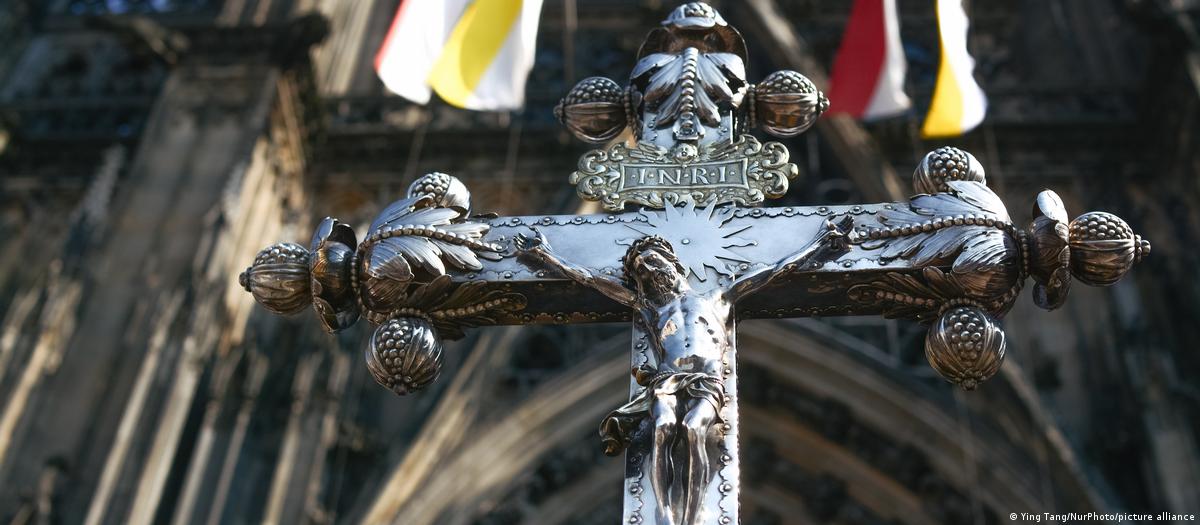
Cologne is one of Germany's largest Catholic archdioceses - Image: Ying Tang/NurPhoto/picture alliance
A German regional court on Tuesday ordered the Archdiocese of Cologne to pay €300,000 (roughly $325,000) in damages to an abuse victim for crimes committed in the 1970s.
It's a far higher sum than Germany's Catholic Church dioceses have paid in voluntary, symbolic compensation payments in the past.
The case could only come to court because the Church allowed it to.
Technically, as in most such cases, the statute of limitations had expired on the crimes, but the archdiocese elected to allow a court determine the appropriate compensation.
Ít also did not contest the allegations of at least 320 instances of abuse by a priest against the plaintiff, 64-year-old Georg Menne, in the 1970s. The priest in question had confessed publicly before his death.
Tuesday's verdict is still subject to appeal, but the first reaction from Cardinal Rainer Maria Woelki seemed to suggest the archdiocese did not plan to.
"I am happy and grateful, that the court has contributed to clarity in this case with its decision," Woelki said, calling sexual abuse "a crime, whose consequences can often negatively impact those affected for their entire lives."
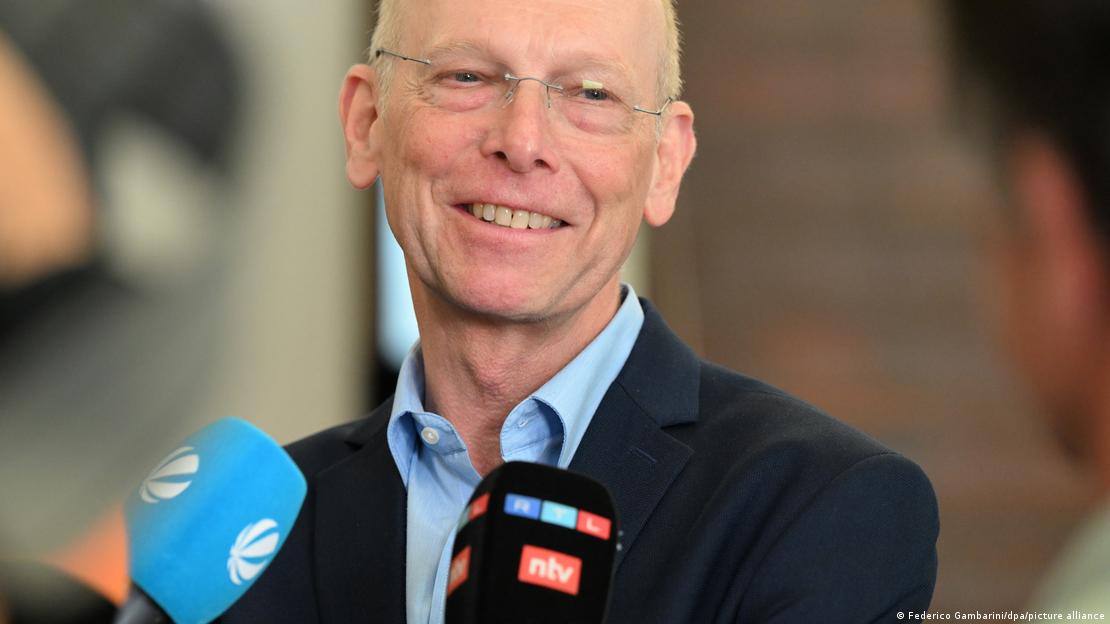
Georg Menne's lawyers had asked for a higher compensation payment, but the judge still awarded one far higher than past voluntary payments - Image: Federico Gambarini/dpa/picture alliance
Highest individual compensation sum in Germany
The plaintiff's lawyers had sought compensation of €800,000.
The court said the €300,000 payable would be reduced by €25,000, the amount Menne had already received as a part of the voluntary compensation payments the Church has been paying out to several victims in recent years.
However, the archdiocese should also cover any future costs of care or treatment relating to trauma from the crimes that Menne might later incur, the judge said.
For most such cases an independent commission based in Bonn had been deciding appropriate sums at the Church's behest. They are referred to as "recognition" payments. According to data from the commission, the average payment for individuals during the program's first two years had been in the region of €22,000, but 8% of cases led to damages of more than €50,000, and a handful stretched past €100,000.
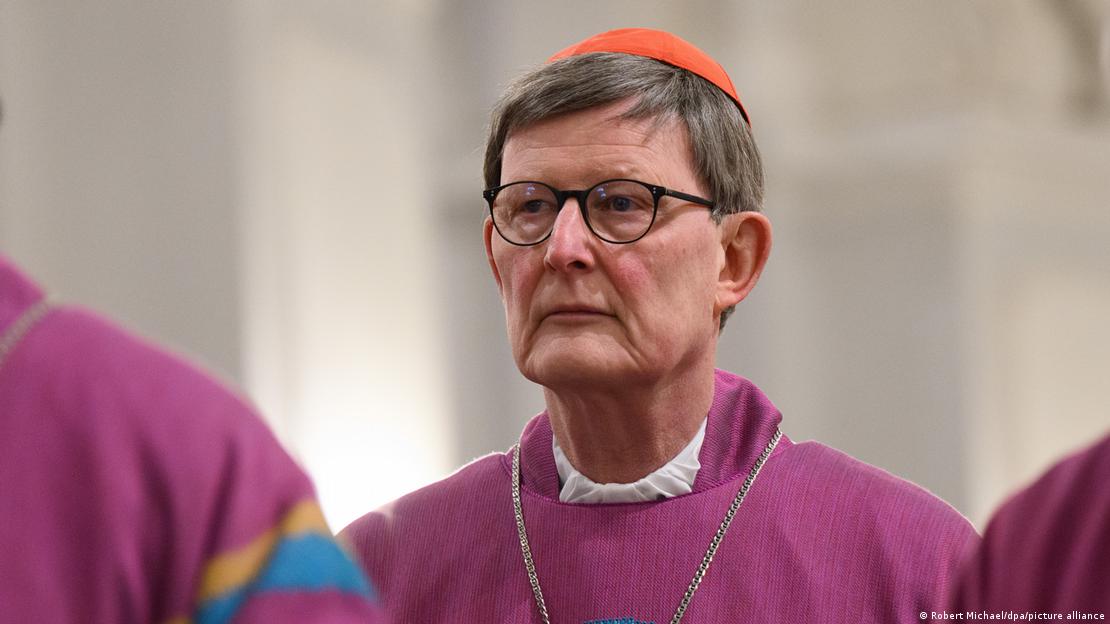
Cologne Cardinal Rainer Maria Woelki said he welcomed Tuesday's verdict - Image: Robert Michael/dpa/picture alliance
Priest in question continued working years after diocese knew
The abuse cases were among those included in the recent report commissioned by the Archdiocese of Cologne trying to document and identify past historical abuse suspects, and also any Church officials involved in trying to hush up the crimes.
The investigation showed that the archdiocese was informed in 1980 and again in 2010 of the cases, but that the priest had been able to continue working for decades nevertheless.
That report's publication in March, after a contentious delay, led to Woelki saying he was "ashamed" of its findings and to him dismissing two still-active members of the clergy in his diocese.
Several other German archdioceses are going through similar processes — as is the case in a series of countries with large Catholic communities, particularly in Europe and North America — following the allegations and revelations of recent decades.
msh/jcg (AFP, dpa, epd, KNA)
/* src.: https://www.dw.com/en/court-orders-c...ges/a-65905696
Puck Futin

 Reply With Quote